Get In Touch

Blog Details

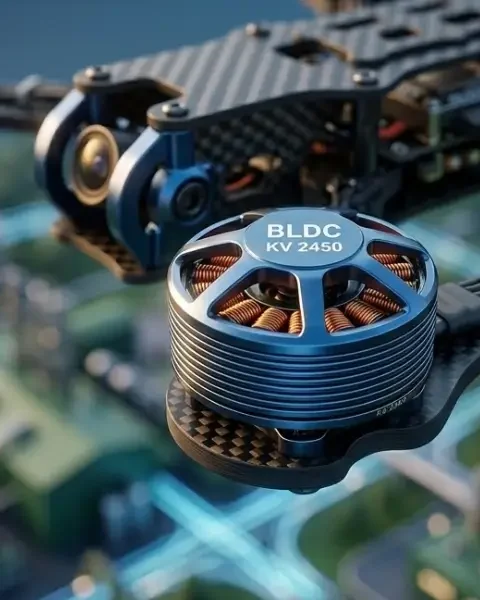
three bldc drone motors side by side 3110, 3115, 5006 on a neutral surface with uav frame in background

3110 vs 3115 vs 5006 BLDC Motor: Which Is Right for Your Drone?

The motor size code on a BLDC drone motor is not just a product number. It tells you the physical dimensions of the stator — and from that, you can predict the motor’s torque output, weight, power handling, and which drone platform it is suited for.

This guide compares the three most common stator sizes used in commercial UAV applications: the 3110, the 3115, and the 5006. If you are new to how stator dimensions affect motor performance, read our guide to BLDC motor components first. 

How to Read a BLDC Motor Stator Size Code

Every BLDC motor carries a 4-digit number as its stator code. The first two digits are the stator diameter in millimetres. The last two digits are the stator height (also called stack height) in millimetres.

stator dimensions and perfomance

These dimensions determine how much copper wire fits on the stator, which sets the KV rating and the peak torque the motor can produce. A wider stator can swing a larger propeller. A taller stator can sustain higher continuous power. Neither dimension alone tells the full story — both matter.

For a full explanation of how KV rating relates to stator geometry, see our guide to BLDC motor KV rating explained.

bldc motor sator size code

The 3110 Drone Motor

The 3110 is a compact, lightweight stator widely used in mid-size commercial inspection and survey drones. At 31mm diameter and 10mm height, it is the smallest of the three sizes compared here.

Key characteristics

  •       Stator: 31mm diameter, 10mm height
  •       Typical KV range: 700–1,100 KV (on 6S systems)
  •       Typical propeller size: 8–12 inch
  •       Weight: low — well suited to weight-constrained platforms
  •       Power handling: moderate — suited to platforms up to ~2 kg MTOW per motor

Where the 3110 excels

The 3110 delivers a strong thrust-to-weight ratio in the 8–12 inch propeller range. Its compact size allows tight motor-to-arm integration on smaller frames, and its lower weight keeps the overall platform light — which directly extends flight time on fixed battery capacity.

It is the right choice when frame space is constrained, platform MTOW is under 4–5 kg, and endurance is a priority over peak lift capacity.

BEST FOR: Compact inspection drones, survey quadrotors, and lightweight multi-rotor platforms in the 2–5 kg MTOW range. Not suited to heavy-lift applications where large propellers and high continuous thrust are required.

The 3115 Drone Motor

The 3115 shares the same 31mm stator diameter as the 3110 but with 15mm of height instead of 10mm. That extra 5mm changes the motor’s character significantly.

Key characteristics

  •       Stator: 31mm diameter, 15mm height
  •       Typical KV range: 400–700 KV (on 6S systems)
  •       Typical propeller size: 10–15 inch
  •       Weight: moderate — slightly heavier than 3110 but meaningfully more capable
  •       Power handling: higher than 3110 — more copper volume means better thermal mass

Where the 3115 excels

The taller stator allows more copper windings, which lowers the KV and increases torque output. The 3115 can spin larger propellers at lower RPM more efficiently than a 3110 running the same propeller at forced higher RPM. This translates directly to better hover efficiency on platforms in the 3–6 kg range. If you are designing a full propulsion system, refer to our UAV motor selection guide.

Think of the 3115 as the step-up motor when a 3110 is undersized for the platform but the full size increase to a 5006 is unnecessary or too heavy.

BEST FOR: Mid-size survey and inspection drones, hexarotors in the 3–7 kg MTOW range, and any platform where the 3110 is marginal on thrust but the jump to 5006 adds too much weight.

The 5006 Drone Motor

The 5006 is a fundamentally different class of motor. At 50mm diameter and 6mm height, it is wide and flat — a disc rather than a cylinder. This geometry is optimised for maximum torque at low RPM with large-diameter propellers.

Key characteristics

  •       Stator: 50mm diameter, 6mm height
  •       Typical KV range: 170–320 KV (on 6S–12S systems)
  •       Typical propeller size: 15–28 inch
  •       Weight: heavier than 3110 / 3115 — but generates proportionally more thrust
  •       Power handling: high — large diameter dissipates heat effectively

Where the 5006 excels

The large stator diameter creates a wide magnetic flux path, giving the 5006 exceptional torque even at the very low RPM needed to spin 18–28 inch propellers efficiently. For heavy-lift platforms, this is the stator geometry that delivers the lowest current draw per kilogram of thrust.

The 5006 is the standard choice for platforms above 5 kg MTOW — cargo drones, agricultural sprayers, heavy inspection systems, and multi-rotor VTOL aircraft. For a deeper look at supply chain considerations for these platforms, see our EU drone motor supply chain analysis.

BEST FOR: Heavy-lift UAVs, agricultural drones, cargo platforms, and any commercial UAV above 5 kg MTOW requiring large propellers and sustained high thrust. Overkill for small inspection drones.

3110 vs 3115 vs 5006: Side-by-Side Comparison

BLDC Motor Size Comparison

Specification 3110 3115 5006
Stator Size 31 × 10 mm 31 × 15 mm 50 × 6 mm
Diameter 31 mm 31 mm 50 mm
Height 10 mm 15 mm 6 mm
KV Range 700–1100 KV 400–700 KV 170–320 KV
Prop Size 8–12 inch 10–15 inch 15–28 inch
MTOW Range Up to ~5 kg 3–7 kg 5 kg+
Best Voltage 6S (22.2V) 6S (22.2V) 6S–12S
Weight Class Light Moderate Heavy
Thermal Mass Low Medium High

BLDC Motor Comparison

Spec 3110 3115 5006
Stator Diameter 31 mm 31 mm 50 mm
Stator Height 10 mm 15 mm 6 mm
Typical KV (6S) 700–1,100 400–700 170–320
Propeller Range 8–12 inch 10–15 inch 15–28 inch
Platform MTOW Up to ~5 kg 3–7 kg 5 kg+
Hover Efficiency High (small UAV) High (mid UAV) Highest (large UAV)
Motor Weight Low Moderate High
Continuous Power Moderate Medium-high High
Controller Current Lower Medium Higher
Typical Application Inspection UAV Survey / hex Heavy-lift / cargo

Which Motor Is Right for Your Drone?

Use the decision framework below to narrow your selection. If you are between two sizes, always prototype and thrust-test both before committing to a production specification. If you need a full system-level approach, refer to our complete UAV motor selection guide.

Choose the 3110 if:

  •       Your platform MTOW is under 4–5 kg
  •       Frame geometry limits motor diameter to 35mm or less
  •       Flight endurance is the primary design objective
  •       You are using 8–12 inch propellers on a 6S system

Choose the 3115 if:

  •       Your platform sits between 3–7 kg MTOW
  •       You need more torque than the 3110 delivers but cannot accommodate the 5006’s weight
  •       You are running 10–15 inch propellers and want lower RPM for efficiency
  •       You are upgrading a 3110-based platform that is marginal on thrust

Choose the 5006 if:

  •       Your platform MTOW exceeds 5 kg
  •       You need propellers above 15 inches for efficient high-thrust hover
  •       You are building for cargo, agriculture, or long-endurance survey missions
  •       Your ESC and power system can support the higher current draw

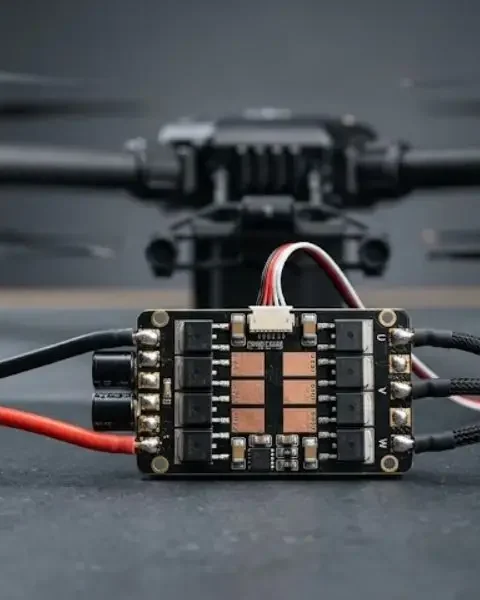
CONTROLLER PAIRING: Each motor size needs a matched ESC. The 3110 and 3115 are typically paired with 40–60A ESCs on 6S. The 5006 on a 12S system may require 80A+ controllers. Read our guide to choosing the right BLDC motor controller to get the pairing right.

All three motors are available from Centrion Systems, manufactured in Europe with full lot traceability and EU supply chain security. View the full product range or contact our engineering team to discuss your platform requirements.

For European UAV OEMs, supply chain provenance matters as much as the specification. Learn why on our EU supply security page.

Frequently Asked Questions

What does the 3110 number mean on a drone motor?

The 3110 is a stator size code. The first two digits (31) are the stator diameter in millimetres. The last two digits (10) are the stator height in millimetres. So a 3110 motor has a 31mm diameter stator that is 10mm tall. These dimensions determine the motor’s torque output, KV range, and which propeller sizes it suits. To understand the working principle behind this, see what is a BLDC motor.

What is the difference between a 3110 and a 3115 drone motor?

Both share a 31mm stator diameter, but the 3115 is 15mm tall versus the 3110’s 10mm. The extra height allows more copper windings, which lowers the KV rating and increases torque output. The 3115 suits larger propellers and heavier platforms than the 3110. The trade-off is slightly more weight. Choose 3115 when the 3110 is marginal on thrust for your platform.

Is the 5006 motor good for heavy-lift drones?

Yes. The 5006 is purpose-built for heavy-lift UAV applications. Its 50mm stator diameter generates high torque at the low RPM needed to spin large 15–28 inch propellers efficiently. It is the standard choice for commercial platforms above 5 kg MTOW, including cargo drones, agricultural sprayers, and large inspection systems.

Can I use a 5006 motor on a small drone?

Technically yes, but it is not recommended. The 5006 is significantly heavier than a 3110 or 3115 and is optimised for large, slow-spinning propellers. On a small drone with small propellers it would be over-engineered, heavy, and inefficient. Use the 5006 only when your platform and propeller size genuinely justify it.

What KV should a 3110 motor have?

On a 6S (22.2V) system, a 3110 motor typically runs at 700–1,100 KV depending on the propeller size and target hover RPM. Higher KV (900–1,100) suits smaller 8–9 inch propellers. Lower KV (700–800) suits 10–12 inch propellers where more torque is needed. Always validate against published thrust data for your specific motor-propeller combination. For deeper understanding, refer to BLDC motor KV rating explained.

What ESC do I need for a 5006 motor?

The 5006 on a 12S system typically requires an ESC rated for 80A continuous or higher, depending on the propeller size and platform thrust requirements. Always select an ESC with 20–30% current headroom above the motor’s maximum draw. For detailed guidance on controller selection, see our BLDC motor controller guide.

Are Centrion Systems motors EU-manufactured?

Yes. Centrion Systems designs and manufactures BLDC motors in the Netherlands. All 3110, 3115, and 5006 variants are produced with full EU supply chain traceability, CE compliance, and lot-level quality documentation. For European UAV OEMs with supply chain or dual-use compliance requirements, see our EU supply security overview or visit our about us page.

Summary

The 3110, 3115, and 5006 are not interchangeable — they are three distinct tools for three different jobs. The 3110 is your lightweight inspection motor. The 3115 is the step-up for mid-size platforms that need more torque without the full weight of a 5006. The 5006 is the heavy-lift specialist, built for large propellers and demanding commercial missions.

Get the stator size right and the rest of the motor specification — KV, ESC pairing, propeller selection — follows logically. Start with your platform MTOW and propeller size, then work backwards using our
UAV motor selection guide. If you need help specifying the right motor for your UAV, contact the Centrion Systems engineering team.

Looking for EU-made BLDC motors for your UAV platform?

Centrion Systems designs and manufactures BLDC outrunner motors in the Netherlands. Built for professional UAV applications with full EU supply chain security.