
If you have ever used an electric drone, an e-bike, or an electric car, you have already benefited from a BLDC motor. But what exactly is it, and why do engineers keep choosing it over other motor types?
This guide explains everything you need to know about BLDC motors in plain, simple language. No complicated formulas. Just clear answers.
What Is a BLDC Motor?
BLDC stands for Brushless Direct Current. A BLDC motor is an electric motor that runs on DC (direct current) power but does not use brushes to transfer electricity to the spinning part.
That single difference, no brushes, makes BLDC motors more efficient, longer-lasting, and much cleaner to run than older brushed motors.

How Does a BLDC Motor Work?
The working principle of a BLDC motor is based on electromagnetism. Here is how it works, step by step:
- 1. DC power enters the motor through the controller.
- 2. The controller converts this into a series of timed electrical pulses.
- 3. These pulses energise coils of wire (called the stator windings) one at a time.
- 4. Each energised coil creates a magnetic field.
- 5. The permanent magnets on the rotor are attracted and repelled by these fields.
- 6. This causes the rotor to spin continuously.
A small sensor (usually a Hall effect sensor) tells the controller exactly where the rotor is at any moment. The controller uses this information to fire the coils in the right order at the right time.
This process is called electronic commutation, and it replaces the brushes found in older DC motors.
Term
Commutation: The process of switching electrical current between the coils in the correct sequence to keep the rotor spinning. In brushed motors, brushes do this mechanically. In BLDC motors, the controller does it electronically.
Key Parts of a BLDC Motor
The Stator
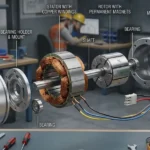
The stator is the outer, stationary part of the motor. It holds the copper wire coils (windings). When electricity passes through these coils, they become electromagnets.
Most BLDC motors use a 3-phase stator. This means there are three separate sets of coils, each powered in sequence to create smooth rotation.
The Rotor
The rotor is the inner spinning part. It contains permanent magnets, usually made from neodymium (a very strong magnetic material). The rotor spins because it reacts to the magnetic fields created by the stator.
The Controller (ESC)
The controller, often called an ESC (Electronic Speed Controller), manages the timing and sequence of electrical pulses going into the stator. Without the controller, a BLDC motor simply will not run.
Hall Effect Sensors
These tiny sensors detect the position of the rotor magnets and send this information to the controller. Some BLDC motors run without sensors (sensorless), using back-EMF detection instead, which is common in drone motors.
Types of BLDC Motors
There are two main types based on how the rotor and stator are arranged:

BLDC Motor vs Brushed Motor: What Is the Difference?
Many people wonder why BLDC motors have replaced brushed motors in most modern applications. Here is a direct comparison:
| Feature | ⚡ BLDC Motor | 🔧 Brushed Motor |
|---|---|---|
| Efficiency | High (up to 95%) Better | Lower (70–80%) |
| Lifespan | Very long (no brush wear) Better | Shorter (brushes wear out) |
| Maintenance | Almost none required Better | Regular brush replacement |
| Heat Generated | Low Better | Higher due to friction |
| Noise Level | Very quiet Better | More noise from brush contact |
| Speed Control | Precise and smooth Better | Less precise |
| Cost | Higher upfront | Lower upfront Lower cost |
| Best For | Drones, EVs, robots, precision tools | Power tools, simple appliances |
Table: BLDC Motor vs Brushed Motor — Feature Comparison
BLDC Motor Applications: Where Are They Used?
BLDC motors are now found in almost every industry that relies on electric power. Here are the most common uses:
Drones and UAVs
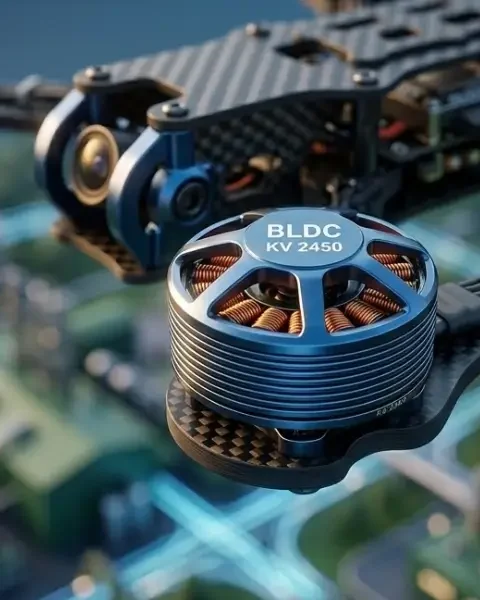
This is one of the biggest use cases. Drone motors need to be light, powerful, and efficient. BLDC outrunner motors are the standard choice for UAV propulsion because they deliver high thrust with very little weight.
Centrion Systems designs BLDC motors specifically for UAV use cases, including inspection drones, survey platforms, and heavy-lift commercial systems. Learn more about our drone motor range.
Electric Bikes and Scooters
Hub motors in e-bikes are almost always BLDC. They sit inside the wheel and provide direct drive without a gearbox. This makes them quiet, low-maintenance, and very reliable.
Electric Vehicles
Many EV manufacturers use BLDC motors for their efficiency and smooth torque delivery. The motor can recapture energy during braking (regenerative braking), which extends battery range.
Industrial Automation and Robotics
Robots need precise, repeatable movement. BLDC motors deliver exact speed and torque control, making them ideal for robotic arms, CNC machines, conveyor systems, and automated manufacturing.
Home Appliances
Modern washing machines, air conditioners, and vacuum cleaners increasingly use BLDC motors. They are quieter and use less electricity than older motor types.
Medical Equipment
Surgical tools, ventilators, and laboratory equipment rely on BLDC motors for their precision and reliability. In medical settings, consistent and controllable performance is critical.
How to Choose the Right BLDC Motor
Choosing the wrong motor is one of the most common and costly mistakes in any build project. Here is what to look at:
KV Rating
KV is the number of RPM the motor produces per volt with no load. A higher KV means faster spinning. A lower KV means more torque.
- High KV (e.g. 2000+): Good for small, fast props on racing drones
- Low KV (e.g. 100-400): Good for large props on heavy-lift UAVs
Stator Size
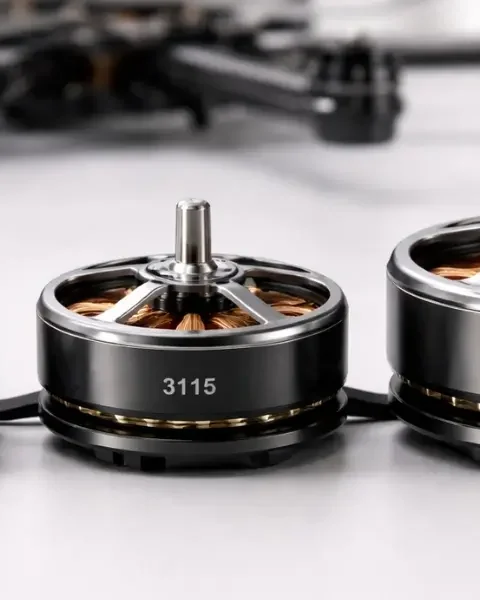
The stator size is written as a 4-digit number like 3110 or 5006. The first two digits are the stator diameter (mm) and the last two are the stator height (mm).
- Wider stator: More torque, good for heavy lifts
- Taller stator: Higher power output
Centrion Systems makes motors in 3110, 3115, and 5006 sizes for different UAV platform needs. See our full product range.
Voltage and Current Rating
Match the motor voltage rating to your battery pack. Running a motor at higher voltage than its rating will damage it. Check the maximum continuous current (Amps) and make sure your ESC can handle it.
Weight and Size
Every gram matters in drone design. BLDC motors come in a wide range of weights. Always check the thrust-to-weight ratio for your platform.
Supply Chain and Origin
For commercial and defence UAV applications, where your motors come from matters.EU supply security is becoming a critical factor for European Union operators who need reliable, non-Chinese sourced components.
Frequently Asked Questions
What does BLDC stand for?
BLDC stands for Brushless Direct Current. It refers to a type of DC motor that works without brushes, using electronic commutation instead.
What is the working principle of a BLDC motor?
A BLDC motor works by using a controller to send timed electrical pulses to the stator coils. These pulses create a rotating magnetic field. The permanent magnets on the rotor follow this field and spin continuously. The controller uses Hall sensors or back-EMF signals to know the exact position of the rotor and keep the timing correct.
What is the KV rating of a BLDC motor?
KV is the RPM per volt rating. It tells you how fast the motor spins for every volt of input with no load. A 1000 KV motor running on 12V will spin at approximately 12,000 RPM with no load. Lower KV motors produce more torque and suit larger propellers. Higher KV motors spin faster and suit smaller, lighter applications.
Is a BLDC motor the same as a brushless motor?
Yes. BLDC motor and brushless motor mean exactly the same thing. Some people also call them brushless DC motors or electronically commutated motors (ECM). They all refer to the same technology.
Can a BLDC motor run without a controller?
No. A BLDC motor cannot run without an ESC or motor controller. The controller is what manages the timing of the electrical pulses to the stator coils. Without it, the rotor has no direction or force to spin.
What is the difference between an inrunner and an outrunner BLDC motor?
In an inrunner motor, the rotor spins inside the stator. Inrunners spin very fast and are used in applications needing high RPM. In an outrunner motor, the outer casing (with magnets) rotates around the fixed inner stator. Outrunners produce higher torque at lower RPM, making them the standard choice for drone and UAV motors.
How long does a BLDC motor last?
A BLDC motor can last tens of thousands of hours under normal operating conditions because there are no brushes to wear out. The main wear items are the bearings. Regular inspection and occasional bearing replacement will extend the lifespan significantly.
What types of drones use BLDC motors?
Virtually all modern drones use BLDC motors. This includes consumer photography drones, commercial inspection UAVs, military platforms, delivery drones, and agricultural spraying drones. The Centrion Systems 3110, 3115, and 5006 motors are designed for professional UAV platforms requiring EU-sourced, supply-secure components.
Summary: Why BLDC Motors Are the Industry Standard
BLDC motors are now the default choice in any application where efficiency, reliability, and precise control matter. Their advantages over brushed motors are clear:
- No brushes means no friction and no spark
- Higher efficiency means longer battery life
- Less heat means safer and more reliable operation
- Longer lifespan means lower total cost of ownership
- Precise speed control means better performance
Whether you are designing a UAV platform, building an e-bike, or engineering industrial automation equipment, understanding BLDC motor fundamentals gives you the knowledge to choose the right motor for your application.
Looking for EU-made BLDC motors for your UAV or drone platform?
Centrion Systems designs and manufactures BLDC outrunner motors in the Netherlands. Built for professional UAV applications with full EU supply chain security.